
Israel has confirmed the killing of the presumed next leader of Hezbollah in an airstrike on southern Beirut earlier in October.
In a statement on Tuesday evening, the Israeli military said strikes in the suburb of Dahiyeh had killed Hashem Safieddine and Ali Hussein Hazima, the head of the militant group’s intelligence branch, three weeks ago.
Subscribe
It was the first time Israel confirmed the killing of the most senior political official in Hezbollah after the former secretary general Hassan Nasrallah. Hezbollah had yet to comment on Israel’s claim.
Safieddine was the head of Hezbollah’s highest political decision-making body, the executive council, and was reportedly picked as the successor to Nasrallah some years ago. He was also a cousin of the former secretary general and was seen as having much of the same charisma that inspired the cult of personality around Nasrallah.
Bangladesh
His fate was unknown after Israeli strikes on Dahiyeh on 3 October, which Israel said were targeting an underground bunker where the senior leader was living.
Hezbollah had reportedly not been able to re-establish contact with Safieddine since the strike and rescue workers were prevented from reaching the site of the bombing.

With the killing of Safieddine, only Naim Qassem, the deputy secretary general of Hezbollah, remains from Hezbollah’s public-facing senior leadership. Qassem has been the face of the group since the assassination of Nasrallah, but he does not enjoy the same popularity among Hezbollah supporters that the late secretary general had.
Bangladesh
It remains unknown who will take the helm as the next leader of the group. In a speech two weeks ago, Qassem said that appointing a new leader was a complex procedure and would take some time. Alongside blows to its political leadership, almost all of Hezbollah’s senior military cadre has been killed by Israel in the last three months.
The strike that killed Safieddine also killed 25 other Hezbollah leaders, according to Israel. Last week, Israel killed the leader of Hamas, Yahya Sinwar, in Gaza.
US secretary of state Antony Blinken said during a trip to Israel on Tuesday that leaders there should “capitalise” on Sinwar’s death as an opportunity to end the war in Gaza and secure the release of hostages taken as part of the deadly Hamas attack that started the war. Blinken also stressed the need for Israel to do more to help increase the flow of humanitarian aid to Palestinians.
Bangladesh
Prime minister Benjamin Netanyahu’s office called his meeting with Blinken, which lasted more than two hours, “friendly and productive.”
Despite the losses in its command structure, Hezbollah has insisted that the group has retained its organisational strength. The group has said this is evidenced by what it says is Israel’s lack of progress in south Lebanon.
Hezbollah fighters have been engaged in daily clashes with Israeli troops since Israel announced its ground incursion into Lebanon on 30 September. Israeli tanks have been spotted in villages along the Israel-Lebanon border and entire towns have been levelled in south Lebanon by Israeli remote detonations.
Israel has said its ground operation into south Lebanon is meant to degrade Hezbollah infrastructure along the border to prevent the group from launching cross-border attacks into Israel. The extent of Israel’s success in its mission is unclear, with limited media access to south Lebanon.
Bangladesh
Safieddine was born in 1964 in southern Lebanon and was a founder member of Hezbollah. He was thought to have spent many years in Qom, the Iranian religious city, and was entrusted by Hezbollah with a variety of tasks over the decades, including managing the organisation’s extensive portfolio of legal and illegal businesses.
The US and Saudi Arabia had put him on their respective lists of designated “terrorists” in 2017.
Unlike Nasrallah, who lived in hiding for years, Safieddine continued to appear openly at recent political and religious events. During the past year of hostilities with Israel, he addressed funerals and other events that Nasrallah had long avoided for security reasons.
Bangladesh
Over the past few days, Israel has stepped up its aerial campaign in Lebanon, striking infrastructure connected to a Hezbollah-linked bank, Al-Qard Al-Hassan, which it accused of financing the organisation. The bank, which is part of Hezbollah’s charitable arm, has more than 30 buildings across Lebanon.
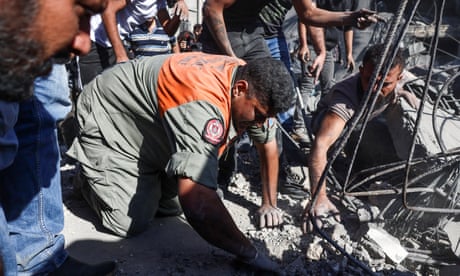
Israel also carried out strikes on Greater Beirut on Monday night, killing 18 people, including four children, and wounding 60 in a strike in Dahiyeh. The strike also caused “major damage” to the nearby Rafik Hariri university hospital, Lebanon’s largest public hospital.
Hezbollah launched a rocket salvo at Kiryat Shmona, north Israel as well as downing an Israeli Hermes 450 drone with a surface-to-air missile on Tuesday afternoon.
Fighting began between Hezbollah and Israel after Hezbollah launched rockets against Israel on 8 October 2023, “in solidarity” with Hamas’s attack the day prior. Fighting has dramatically escalated since Israel launched “Operation Northern Arrows” on 23 September.
More than 2,500 people have been killed and above 11,850 have been wounded in Lebanon over the past year.


